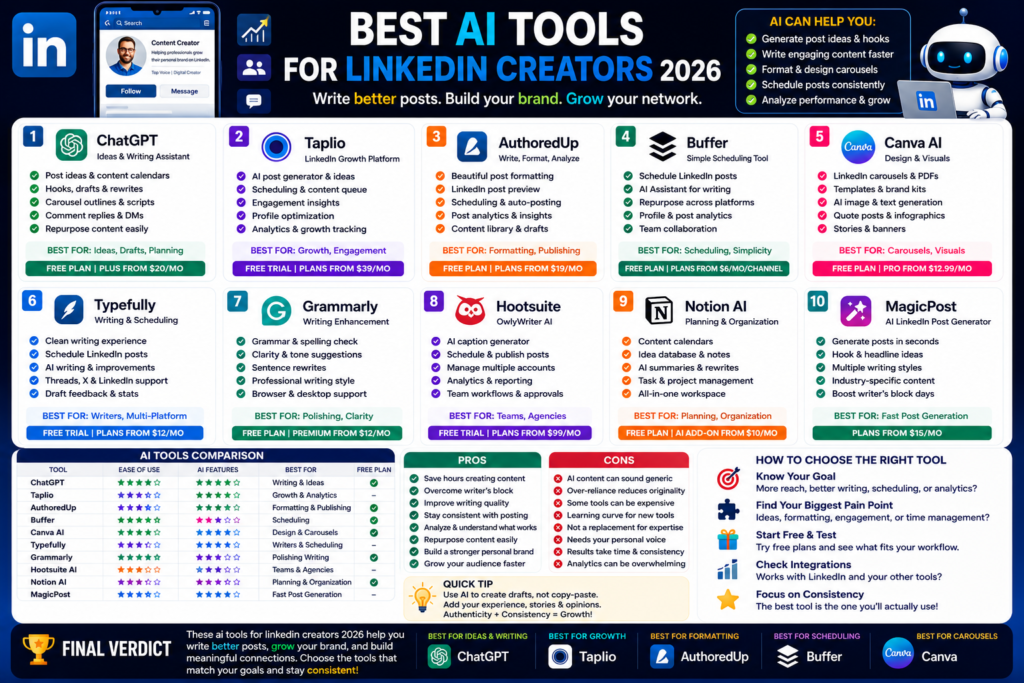
Best AI Tools for LinkedIn Creators 2026
Best AI Tools for LinkedIn Creators 2026: Write Better Posts, Grow Your Brand, and Save Time...
Quick Answer:
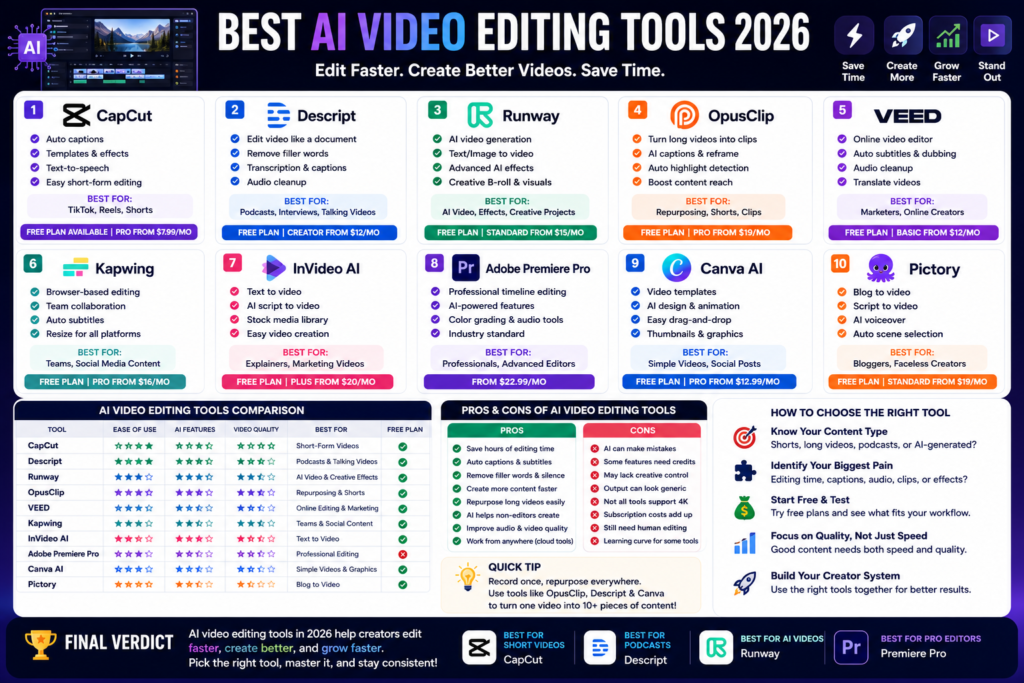
The best ai video editing tools 2026 are CapCut, Descript, Runway, OpusClip, VEED, Kapwing, InVideo AI, Adobe Premiere Pro, Canva AI, and Pictory. CapCut is best for short videos, Descript is best for podcasts and talking-head videos, Runway is best for AI video generation, and Adobe Premiere Pro is best for professional editors.
The best ai video editing tools 2026 can save creators, marketers, freelancers, and businesses a lot of time.
And honestly, video editing is one of the hardest parts of content creation.
Recording a video is one thing.
Editing it is another story.
You have to cut mistakes, add captions, clean audio, resize for different platforms, create clips, remove silence, add music, fix lighting, generate B-roll, and export everything in the right format.
That can take hours.
AI video editing tools make this process faster.
They can help you auto-generate captions, remove filler words, clean background noise, create short clips from long videos, turn scripts into videos, generate AI visuals, translate videos, and even edit clips with simple prompts.
Here is the thing.
AI will not make every video perfect.
You still need taste, timing, storytelling, and a good message.
But AI can remove boring editing work and help you publish more consistently.
That matters because video is everywhere now.
YouTube, TikTok, Instagram Reels, LinkedIn, Facebook, webinars, online courses, podcasts, ads, and business presentations all need video.
So if you create content in 2026, using the right AI video editor can make a real difference.
Not every AI video tool is useful.
Some tools look cool but create low-quality videos. Some are expensive. Some are too advanced for beginners. Some are great for short clips but weak for long videos.
A good AI video editor should help with real editing problems.
The first thing that matters is speed.
A good AI video tool should help you:
If the tool saves time every week, it is worth testing.
The tool should also be easy to use.
Not every creator wants a professional timeline editor.
Some people need a simple editor for TikTok and Reels.
Others need a serious tool for YouTube, courses, or client videos.
The right tool depends on your workflow.
For example, CapCut is great for short social videos. Descript is great for text-based editing. Adobe Premiere Pro is better for professional editors. Runway is better for AI-generated video effects.
Speed is not enough.
The final video still needs to look good.
A good AI video editing tool should produce clean captions, good audio, smooth exports, and professional-looking clips.
Bad captions, weird cuts, and low-quality AI visuals can hurt your brand.
So always review AI output before publishing.
Here are the best AI video editing tools I would actually consider.
CapCut is one of the best AI video editing tools for short-form content.
It is especially popular for TikTok, Instagram Reels, YouTube Shorts, and quick social videos.
CapCut is easy to use, beginner-friendly, and packed with creator-focused features.
Best for:
Honestly, CapCut is one of the easiest tools to recommend for beginners.
You do not need to be a professional editor.
You can import clips, cut them quickly, add captions, use effects, resize videos, and export for social media.
It is not the best tool for complex professional editing.
But for fast social content, it is excellent.
If you are a creator posting short videos every week, CapCut should be one of your first choices.
Descript is one of the best AI video editors for people who record talking videos.
It is especially useful for podcasters, YouTubers, educators, coaches, course creators, and interview-based creators.
The main idea is simple.
Descript lets you edit video and audio like editing a document.
That means you can edit the transcript, and the video changes with it.
Best for:
In my experience, Descript is amazing for people who talk on camera.
If you record a 30-minute podcast and want to remove mistakes, silence, filler words, and awkward pauses, Descript can save a lot of time.
It is not always the best for cinematic videos.
But for educational videos, podcasts, tutorials, and interviews, it is very strong.
Runway is one of the most advanced AI video tools.
It is not just a normal video editor. It is more focused on AI-generated video, creative effects, image-to-video, text-to-video, and advanced visual experiments.
Best for:
Runway is great for creators who want to make videos that are hard to film manually.
For example, you can create cinematic scenes, stylized shots, AI B-roll, product visuals, concept ads, and creative animations.
But here is my honest opinion.
Runway is not the first tool every beginner needs.
If you just want to cut TikToks, use CapCut.
If you want to create AI video scenes or experimental visuals, Runway is much more powerful.
OpusClip is built for repurposing long videos.
If you create podcasts, webinars, interviews, YouTube videos, livestreams, or educational content, OpusClip can help turn long content into short clips.
Best for:
This is one of the smartest uses of AI video editing.
Instead of creating ten separate videos from scratch, you can record one long video and turn it into many short clips.
For example:
That is efficient.
OpusClip is especially useful for creators who already create long-form content.
If you only create short videos from scratch, you may not need it.
But if you have long videos sitting unused, OpusClip can help you get more value from them.
VEED is a strong browser-based AI video editor.
It is useful for creators, marketers, solopreneurs, educators, and small businesses that want an easy online editing workflow.
Best for:
The good thing about VEED is that it combines many tools in one place.
You can record, edit, subtitle, clean audio, translate, create clips, and prepare content for different platforms.
It is not as advanced as Adobe Premiere Pro for professional editing.
But for online creators and businesses, it is practical.
If you want a clean browser editor with AI features, VEED is worth testing.
Kapwing is another strong online AI video editor.
It is useful for teams that want simple collaboration, browser editing, subtitles, resizing, B-roll generation, translation, and social video workflows.
Best for:
Kapwing is good if you do not want to install software.
Everything works in the browser.
This makes it helpful for small teams, agencies, teachers, marketers, and social media managers.
In my opinion, Kapwing is best when you need speed and collaboration more than advanced timeline editing.
It is a practical tool, not a heavy professional editing suite.
InVideo AI is useful if you want to create videos from prompts.
Instead of editing everything manually, you can give the tool an idea, topic, or script, and it helps create a video.
Best for:
This is helpful for small businesses, YouTubers, marketers, and faceless channel creators.
For example, you can ask it to create a video about “5 tips for saving money as a student” or “how to choose the right laptop for work.”
It can create a starting draft with visuals, text, music, and narration-style structure.
But you should still edit it.
AI-generated videos can feel generic if you publish them without changes.
Use InVideo AI to create a draft faster, then improve it with your own style.
Adobe Premiere Pro is still one of the best tools for professional video editors.
It is more advanced than most beginner-friendly AI video tools.
Premiere Pro is best for editors who need control.
Best for:
Adobe has added more AI features over time, including tools for generative extension, masking, object selection, speech enhancement, captions, and workflow improvements.
If you are a serious editor, Premiere Pro gives you more control than simple AI video apps.
But it also has a learning curve.
If you are a beginner making short Reels, Premiere may feel too much.
If you edit client videos or professional YouTube content, it is worth learning.
Canva is not only for graphics anymore.
It also helps with simple videos, social clips, presentations, animations, templates, and visual content.
Best for:
Canva is great if you want your videos to look cleaner without learning complex editing software.
It is especially useful for:
Canva is not the best for complex video editing.
But for simple branded videos, it is very useful.
You can create short promotional videos, social posts, presentation clips, and animated designs quickly.
Pictory is useful for turning text content into videos.
It is especially helpful for bloggers, marketers, educators, and faceless video creators.
Best for:
If you already write blogs, newsletters, or scripts, Pictory can help turn that content into videos.
This is useful because not everyone wants to appear on camera.
For example, you can turn a blog post into a short explainer video for YouTube, LinkedIn, or Facebook.
As always, the AI draft should be edited.
But it gives you a fast starting point.
| Tool | Best For | Beginner Friendly | Best Use Case |
|---|---|---|---|
| CapCut | Short-form videos | Yes | TikTok, Reels, Shorts |
| Descript | Talking videos and podcasts | Yes | Transcript-based editing |
| Runway | AI video generation | Medium | Creative AI visuals |
| OpusClip | Long-to-short clips | Yes | Repurposing podcasts and videos |
| VEED | Online editing | Yes | Subtitles, dubbing, social clips |
| Kapwing | Browser-based team editing | Yes | Social videos and collaboration |
| InVideo AI | Prompt-to-video | Yes | Explainers and marketing videos |
| Adobe Premiere Pro | Professional editing | No | Advanced video projects |
| Canva AI | Simple social videos | Yes | Branded video designs |
| Pictory | Blog-to-video | Yes | Text-based video creation |
AI video editing tools can make content creation much faster.
They can help you:
In my experience, the biggest benefit is speed.
AI helps you publish more without spending your whole day editing.
AI video tools also have problems.
They can:
Here is the thing.
AI can help edit faster, but it cannot fully replace a good editor’s judgment.
Timing, emotion, story, and pacing still matter.
YouTubers should use Descript, Premiere Pro, CapCut, OpusClip, Runway, and Canva.
Use Descript for talking videos.
Use Premiere Pro for serious editing.
Use OpusClip for Shorts.
Use Canva for thumbnails and simple video graphics.
Short-form creators should use CapCut, Canva, VEED, OpusClip, and Kapwing.
CapCut is the easiest starting point.
Canva helps with visuals.
OpusClip helps repurpose longer videos.
Podcasters should use Descript, OpusClip, VEED, and Adobe Premiere Pro if they do video podcasts.
Descript helps edit audio and video from transcripts.
OpusClip helps turn episodes into short clips.
Small businesses should use Canva, VEED, InVideo AI, CapCut, and Pictory.
These tools help create promotional videos, social ads, product videos, explainers, and branded content.
You do not need a full editing team to create decent video content now.
Professional editors should focus on Adobe Premiere Pro, Runway, Descript, and maybe Kapwing or VEED for faster online workflows.
AI can speed up repetitive tasks, but advanced editing still needs skill.
The best AI video editing tools in 2026 are CapCut, Descript, Runway, OpusClip, VEED, Kapwing, InVideo AI, Adobe Premiere Pro, Canva AI, and Pictory.
CapCut is one of the best free AI video editing tools for beginners and short-form creators. VEED, Kapwing, Canva, Descript, Runway, and OpusClip also offer free or trial options with limits.
Descript is best for talking-head YouTube videos, Adobe Premiere Pro is best for professional editing, Canva is useful for thumbnails, and OpusClip is great for turning long YouTube videos into Shorts.
CapCut is the best AI video editing tool for TikTok, Instagram Reels, and YouTube Shorts because it is fast, easy, mobile-friendly, and built around short-form video editing.
No, AI cannot fully replace good video editors. AI can cut clips, add captions, clean audio, and generate drafts, but human editors still understand pacing, emotion, storytelling, brand style, and final quality.
The best ai video editing tools 2026 depend on your content style.
If you create short videos, start with CapCut.
If you create podcasts or talking-head videos, use Descript.
If you want AI-generated video and creative effects, try Runway.
If you want to turn long videos into short clips, use OpusClip.
If you want online editing with subtitles and dubbing, test VEED.
If you need team-friendly browser editing, try Kapwing.
If you want prompt-to-video content, use InVideo AI.
If you are a professional editor, learn Adobe Premiere Pro.
If you want simple branded videos, use Canva AI.
If you want to turn blogs into videos, test Pictory.
My honest advice is simple.
Do not use all ten tools.
Pick based on your biggest editing problem.
If editing short videos takes too long, use CapCut.
If cutting podcasts is painful, use Descript.
If repurposing content is your goal, use OpusClip.
If you need professional editing, use Premiere Pro.
AI video tools can save time, but your final video still needs your eye.
Use AI to edit faster.
Use your own taste to make the video worth watching.
For more practical guides like this ai video editing tools 2026 article, keep reading AI Daily Tool for honest AI reviews, simple comparisons, and real-world creator tools.
Best AI Tools for LinkedIn Creators 2026: Write Better Posts, Grow Your Brand, and Save Time...
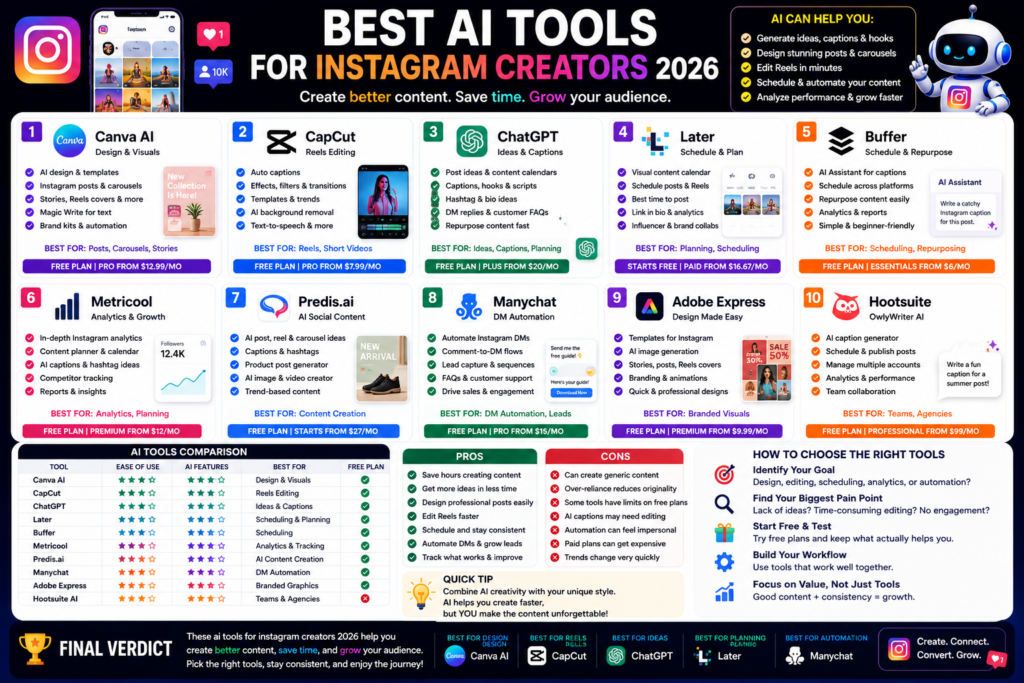
Best AI Tools for Instagram Creators 2026: Create Better Posts, Reels, and Carousels Faster Quick Answer:...
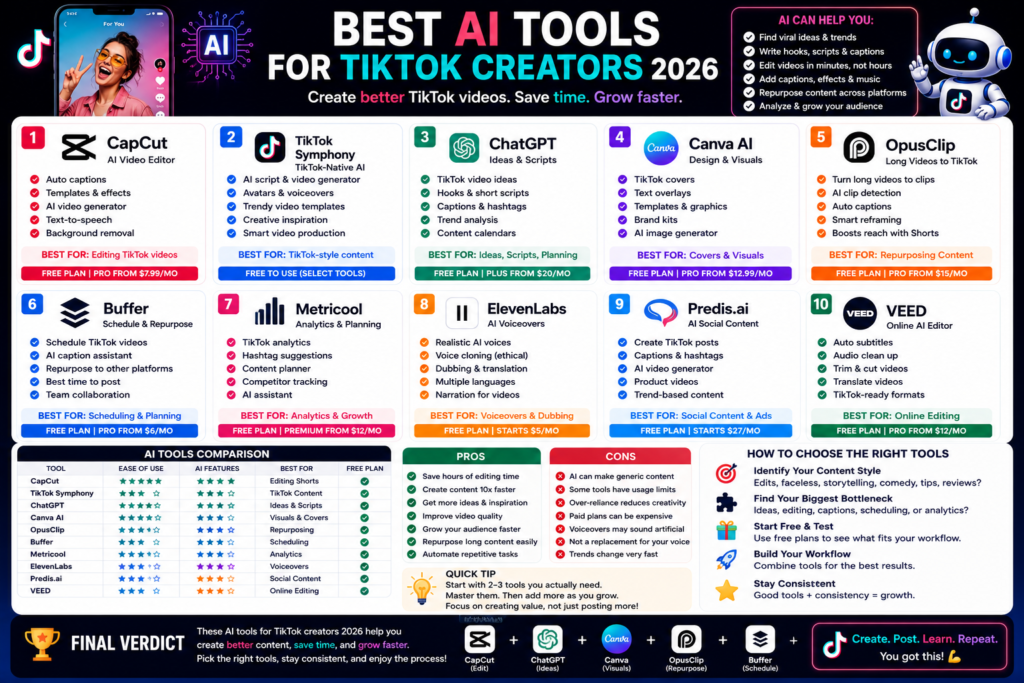
Best AI Tools for TikTok Creators 2026: Create Faster, Edit Smarter, and Grow Your Audience Quick...
Leave a Comment